|
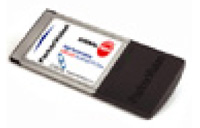
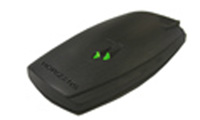
We are a reseller of ParkerVision’s Wireless cards that connect a notebook and desktop computers to any 802.11b, 802.11g, or 802.11b/g compliant wireless network, and is designed to maximize the users experience when connecting wirelessly at home, work, or favorite hotspot.
ParkerVision's breakthrough D2D technology is engineered to deliver unmatched performance for consumers seeking hi-speed data rates over maximum distances, in real world conditions. D2D Technology offers extended distance, higher data throughput and lower power consumption than products that utilize traditional transceivers.
|
|
|
|
WLAN1500 PCMCIA Card
|
WLAN 1500 USB Card
|
|
Features:
- Compatible with 802.11b and 802.11g standards
- Simple to install (Manual and Software included)
- 128 WEP Encryption Security
- Over 130 patents awarded and pending
- Direct Sequence Spread Spectrum
- 1 Year limited warranty.
|
|
Requirements:
- Windows 2000 or XP Systems.
- Minimum 300Mhz, 128 MB RAM,
- One available CardBus Type II Slot
|
|
Requirements:
- Windows 2000 or XP Systems.
- Minimum 300Mhz, 128 MB RAM,
- One available USB port
|
|
The WLAN 1500 PCMCIA Card was
voted BEST Wireless LAN Card for 200
by “Laptop Ultimate Choice Magazine”
How D2D Technology differs from other systems
The D2D Technology combines matched filter, sampling theory, and energy transfer techniques to produce an optimum direct conversion signal processing architecture. Unlike mixers, the D2D was not designed to be a frequency translator. When used as a receiver the D2D circuit directly demodulates the baseband information from the RF carrier with an optimized signal to noise ratio. Conversely, when used as a transmitter, the D2D circuit modulates the baseband information directly onto the RF carrier.
The D2D circuit architecture uses sub-harmonic principles to reduce both the on-channel re-radiation and circuit power requirements without sacrificing low path loss or noise figure.
D2D uniquely uses the RF input signal to extend its linearity and enable high linearity per milliwatt-consumed operation while simultaneously working with very low Local Oscillator input levels to further reduce on-channel re-radiation and DC offsets.
|